
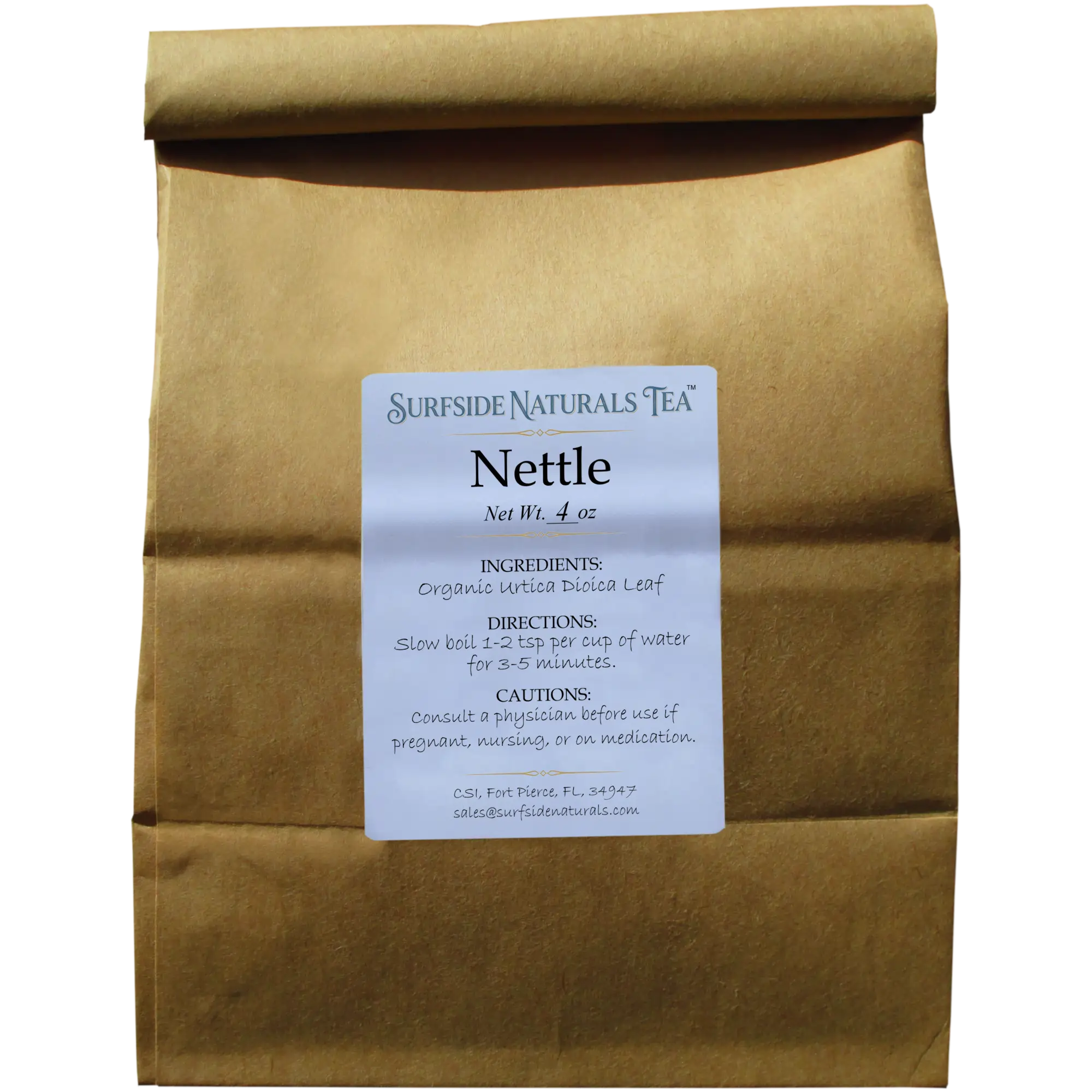
What is Nettle?
Nettle (Urtica dioica) is a perennial herb of the Urticaceae family, native to the temperate regions of Europe, Asia, and North America. Often called stinging nettle due to the small needle-like hairs that cover the stems and stalk, the plant has been used as food, tea, and in natural remedies for over 2000 years.
Nettle Benefits
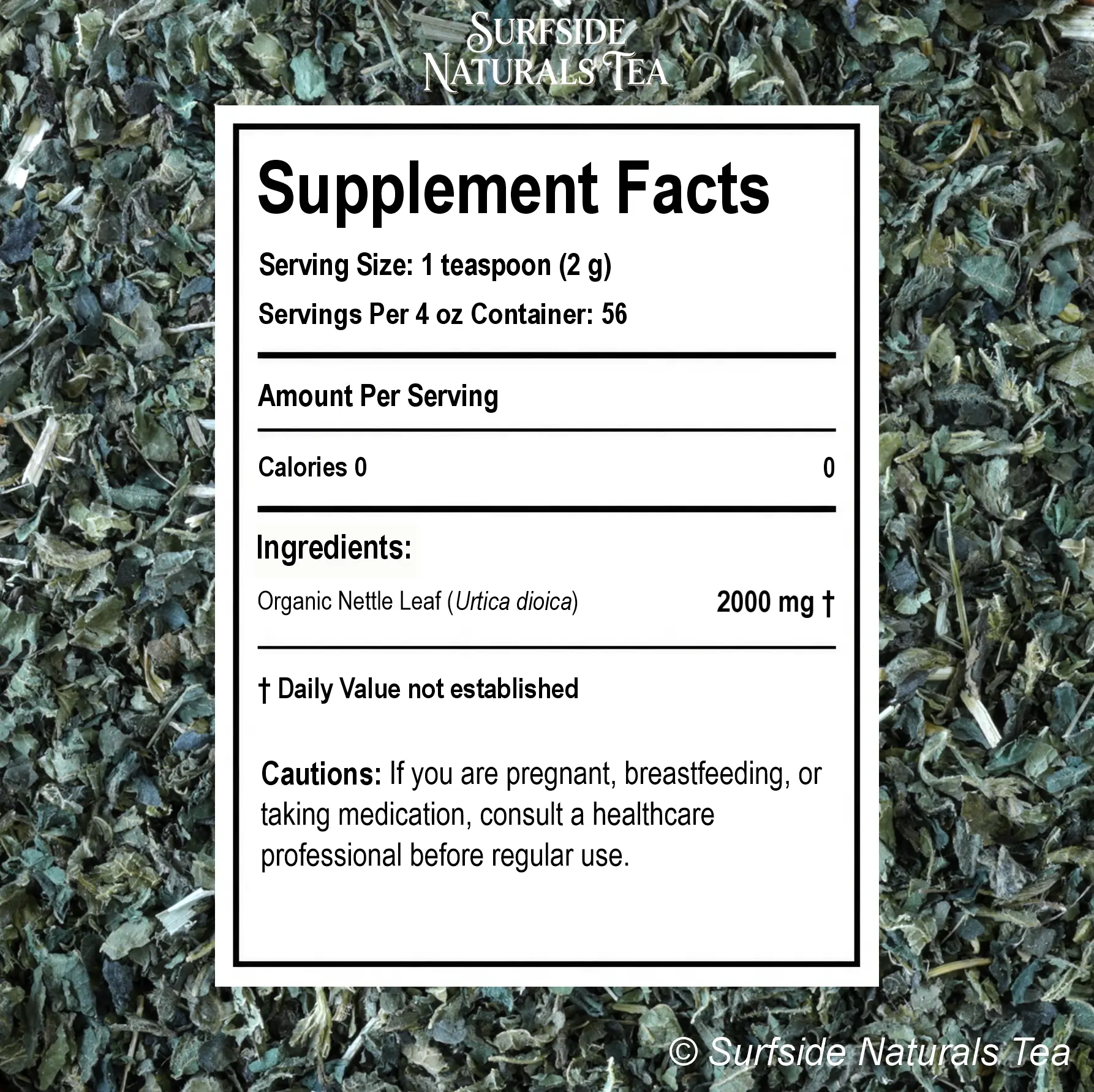
Nettle is packed with nutrients, including calcium, magnesium, iron, potassium, silica, zinc, manganese, vitamin A, vitamin C, vitamin K, B vitamins (including folate), vitamin E, chlorophyll, flavonoids like rutin and quercetin, phenolic acids, plant proteins, and amino acids.
- Its rich mineral and chlorophyll content supports its use for vitality, recovery, and as a women’s tonic during menstruation and postpartum recovery.
- The minerals in nettle also support its use as a gentle diuretic for fluid balance and urinary comfort.
- Nettle’s combination of nutrients, flavonoids, and phenolic compounds, along with clinical studies, supports its use in relieving joint discomfort and seasonal allergy symptoms. More scientific research is needed.
Flavor Profile
Mild, slightly sweet, and earthy with soft vegetal notes.
How to Make Nettle Tea
Nettle is non-bitter, so it can be steeped longer to extract the maximum amount of beneficial compounds.
- Use 1 to 3 teaspoons of nettle leaf per cup of water.
- Bring the water to a boil.
- Add the tea, then slowly pour in the water.
- Cover and steep for 10 to 30 minutes.
- Allow to cool, strain, and serve.
Cautions
- Nettle leaf is generally well tolerated. Mild digestive upset or allergic reactions are rare.
- Consult a healthcare professional before use if you are taking medication or have a medical condition. Nettle has a mild diuretic effect, so use with care if you have been advised to limit fluid intake.
- Because of its high nutrient content, nettle has been traditionally used during pregnancy and breastfeeding. However, safety has not been fully established by modern clinical research. Consult a healthcare professional before using nettle regularly while pregnant or nursing.
Frequently Asked Questions
What is nettle tea good for?
People traditionally drink mineral-rich nettle tea as a daily tonic to support overall vitality, fluid balance, joint comfort, and the relief of seasonal allergy symptoms.
Does nettle tea have caffeine?
No, it is naturally caffeine-free.
What does nettle tea taste like?
It has a mild flavor that some people describe as slightly sweet.
Does nettle tea contain iron?
Yes, nettle leaf is naturally rich in iron and other minerals.
How much nettle tea can I drink each day?
1 to 3 cups a day is generally considered safe for healthy adults.
Is nettle tea good for the kidneys?
It has traditionally been used as a gentle diuretic to support healthy fluid balance. People with health issues related to the kidneys should speak with their doctor regarding regular use of nettle tea.
Reviews
There are no reviews yet.